Street Food and More in Mumbai

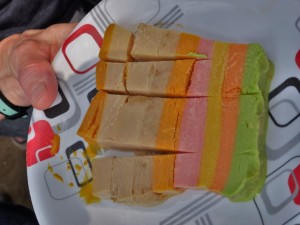
Kulfi from Sharma's Milky
Kulfi from Sharma’s Milky

As financial capital of India and home to Bollywood, Mumbai has long held a cosmopolitan outlook on culture and food.  And in a city of 18 million people – well, the possibilities for dining are practically endless.

With the help of knowledgeable locals – and a little sweet serendipity, too – I “discovered” these South Mumbai favourites (including some of the BEST street food vendors on popular Chowpatty Beach)…


Read more here or in the current issue of Taste & Travel International.

Tenacious Crete

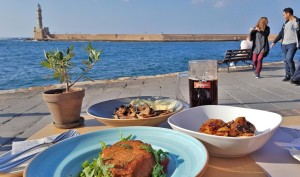
lunch at taverna monastiri, chaniaI’m here on the water’s edge of what’s considered to be the most beautiful Old Town in Greece.  From my vantage point, I see a Venetian lighthouse standing sentry over a narrow harbour entrance and a Turkish mosque – now serving as an exhibition hall – opening its doors to the morning air.

This is Chania, second-largest city on the island of Crete, where the architecture provides just a sliver of insight into a turbulent history…

Read the full story here and in the new issue of Taste & Travel International magazine.

In Search of Venetian Fare

Gondola at the dockWhen you visit the magnetic city of Venice, two things are for certain:

1)  You will get lost.

2)  You will be hard-pressed to find quality Venetian food in the company of locals.

Thankfully, there’s a way to tackle both – and it’s guaranteed to be more than a little fun.

Find out how, in my latest article “In Search of Venetian Fare“.  You’ll find it on my website here.

Or look for it in the current issue of Taste & Travel International, now fully accessible online here.  (Give these last two links a dozen or so seconds to fully load – then click happily through the great travel content, photographs and recipes that you’ll find in every issue of T&T).

Because what’s better than a little armchair travel as we hunker down for the longest nights of the year?

(With apologies to southern hemisphere readers for my ethnocentricity).

Profiles of Kerala

Photo credit: S. Dunk

The screen door creaks a quiet complaint as I ease it shut and slide into a rattan chair.  Beneath the low-thatched eaves of my cottage, I ponder the trees emerging from the morning mist and warm my hands gratefully on my coffee glass.  According to the card on my nightstand, the brew is podi kappi, “the traditional black coffee of the local people in the High Range area”.  I only know it is hot and dark and redolent with cardamom, cumin, and fenugreek.  As caffeine and sun make inroads on my hazy dawn, a soft hoot emerges from the canopy: an unseen langur monkey alerts his family to my presence.

Read the full story here and in the Spring Issue of Taste & Travel International magazine.


Privileged Travel

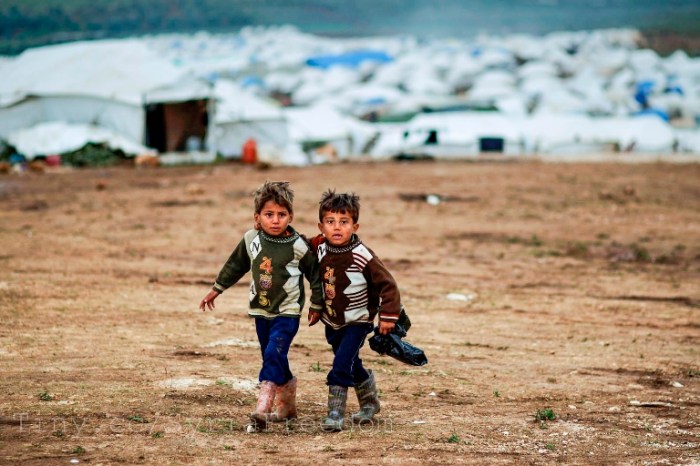
Kids in a Syrian refugee camp
Kids in a Syrian refugee camp (Used under Creative Commons License: Muhammed Muhelsen)

I have a special privilege when I travel.

I get to take home for granted.

I choose when to leave it.  It’s always there when I want to come back.

In a world where one in every 113 people have been forced to flee their homes because of war or persecution, that’s a rare privilege indeed.

Today on World Refugee Day, we recognize and celebrate the resilience and strength of those living in refugee camps and those struggling to create a new life in their adoptive countries.

While politicians and policy-makers wrangle about the best ways to address (or ignore) the refugee crisis, we can take time to understand the issues better.

Check out this video as you turn to FIFA World Cup today.

Check out these popular books by Canadian authors to supplement your summer reading.

Check out UNHCR Canada  for the full picture on refugees in the world today.  (Prepare to be overwhelmed).

And check out these stories and video clips (Soap and Starbucks) to find out what refugees are doing in Calgary, Victoria, and Surrey, BC.  (Prepare to be inspired).

#WithRefugees

A Calgary Kind of Craving

Peace Bridge, Calgary
Photo credit – D. Mulligan (via Creative Commons license)

You’d be forgiven if you didn’t know that Calgary is a great food town.  It’s kind of a well-kept secret.

Except to those who’ve been paying attention…

If Calgary hasn’t been on your radar for awhile, find out what you’ve been missing – and the best ways to (re)discover it – in my piece “A Calgary Kind of Craving” in the new issue of Taste & Travel International.

You can read the full story here – or check out the complete Spring Issue of Taste & Travel on Zinio, Pocket Mags, Flipster, PressReader (free from your local library), or with the new T&T app (available on iTunes and GooglePlay).

Snapshots of Croatia

Dubrovnik at nightStunning Dubrovnik – with its old city walls jutting into the Adriatic Sea and its evocative Game of Thrones settings – is Croatia’s brightest calling card for good reason. Our early morning walk atop its ramparts brings heart-stirring angles across the red-tiled roofs. A gondola ride up Mt. Srd provides even more great photos – plus an opportunity to peruse the passionate exhibit “Dubrovnik During the Homeland War” housed in the Napoleonic fortress.

But it’s the evenings, when the cruise-ship day-trippers have disappeared and the sun shines rosy on the tiled streets, that the Old Town is most magical…


Come along for the ride as I collect “Snapshots of Croatia” from tip to tip of the country’s Adriatic coast – then check out Calgary’s best sources for Croatian food and libations.  You’ll find it all in the current issue of Calgary’s City Palate.

Passion for Perigord

Chefs Fudge and Meret depart Château Montastru
Photo credit – Steve Dunk

It’s 9:30 am and I’m elbow-deep in foie gras in a château in southwest France.  Not literally to the elbows, mind you, but I’m as up-close-and-personal as I’m likely to get, thrilled and terrified in equal measure as I tease vascular tissue free from the prized duck liver.  Despite the cooling armour of the castle’s thick walls, the foie gras seems to be melting under my fingers and I’m beginning to sweat.  My mentor, Chef Thierry Meret, reassures me with his usual bonhomie – and a shot of plum brandy.

Read the full story in the Winter 2018 Issue of Taste & Travel International magazine.

Thoughts on Hospitality

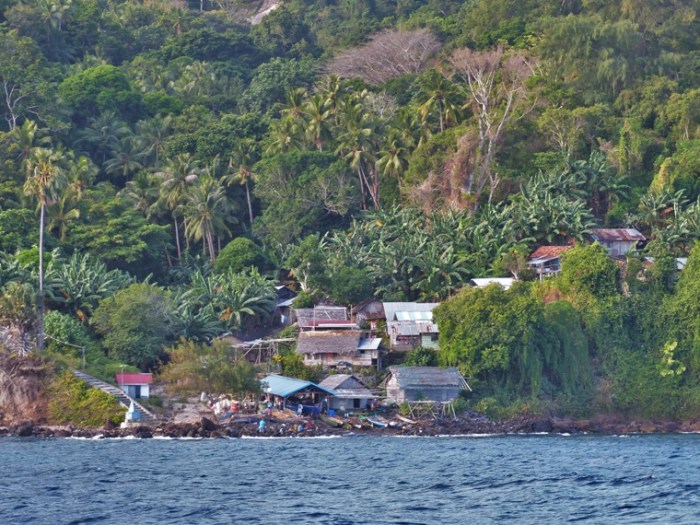
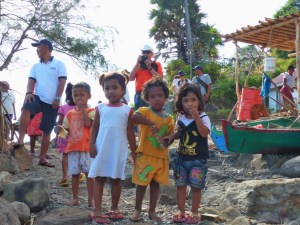
Village on Serua island
Village at Serua Island, Indonesia

At this time of year, when so many of us are preparing to open our homes to friends and family, my mind keeps going back to an experience that I had in an unlikely place this past September.

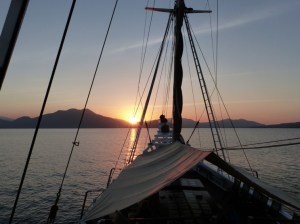
With eleven other passengers and a crew of fifteen, I was motoring through some of the remotest islands of Indonesia on a traditional two-masted phinisi schooner.  We’d been making slow headway through our two-week sailing trip, hampered by a cranky engine and stormy seas that had us reconfiguring our route on a daily basis to avoid the worst of the swells.

The Katharina at seaAs darkness settled over the deck on Day 7, the captain decided to make for Serua by morning. This tiny volcanic island had once hosted a community of five hundred people on its saddle ridge – until  a 1968 eruption caused villagers to be evacuated to Seram, some 400 kilometres to the north.  Over the decades, about a hundred of the villagers had trickled back to the island to rebuild a scanty village near the shore – their numbers limited by the lack of a school or medical clinic, but the green fertility of their island making a homing call too loud to ignore.  The ruins of the church were still visible on the ridge – offering a destination with which to stretch sea-weary legs for those of us able to tackle the steep trail.

Before daybreak, our ship radio crackled to life.  “Phinisi! Phinisi! Are you coming our way?”  Ships were a rare sight in these parts, and in the pre-dawn light we’d been spotted on the horizon by Seruan fisherman.  Before we’d even announced our presence, the village kepala (headman) was extending an invitation to come ashore.

A Serua welcomeNo sooner had we dropped anchor than several village men approached in wooden canoes, bearing the gift of a grouper for our dinner, and offering to motor us safely to the slip of a gravel beach.  Here a dozen other villagers waited in welcome and curiosity.

At the kepala‘s house,  plastic chairs were pulled out for us under a tarp stretched across bamboo poles.  A tiny cloth-draped table offered drinking water and banana chips.  When we expressed concern about making the ridge before the heat got unbearable, the family waved us on, with promises to return when we’d finished our climb.

Trail to the ridge -web
Photo credit – Christian Romsy

We followed the villager assigned to lead us up the trail, past gardens of cassava and sweet potato and papaya, and through the biggest banana forest I had ever seen.  As we rested near the ruined church, shouts from the forest let us know that some of the men had taken a break from the clove and nutmeg harvest to pick young coconuts for our refreshment. The sweet coconut water restored us in the soaring heat like no sport drink ever could.

We got our formal welcome to the island when we returned to the kepala‘s house, and the kepala‘s wife plied us with fresh, hot pisang goreng (fried bananas).  Our enthusiasm for the cooking meant the pisang goreng kept coming – and with it, photos and stories and smiles and laughter.  With our sketchy Indonesian, much flapping of hands, and some translation by our crew, we talked together of food and family – universal things. At some point, the conversation devolved into gentle bawdy humour (another universal tendency, it seems).

Photo credit – Christian Romsy

When the time came to leave, the kepala‘s wife produced a big jar of banana chips for us to share on our onward voyage. We dug into our packs for reciprocal gifts – Canada flag pins and gently-used clothing.  In a shower of hand waves and terima kasihs (thank- you’s), we climbed back into the canoes and headed for the ship.

Although I’ve been treated many times to Indonesian hospitality, this was as genuine and generous a welcome as I’ve experienced anywhere – and I tried to describe it to those who’d been warned off the trail and had stayed on board.  But it was a fellow traveller named Geoffrey who said it best:  “This is the place you go when you need to restore your faith in humanity”.

Serua Island welcoming committee
Photo credit – Margaret Cole

It’s those thoughts and images that are forefront in my mind this week. The gift of opening one’s home unreservedly to others.  The recognition that the opportunity to connect is valuable and fleeting and we should drop everything to embrace it whenever it turns up.

This is where I’m supposed to vow to follow the lead of those Seruan villagers – to shelve time, ego, and image for the higher principles of spontaneity, connecting, and community building.  But I’d be disingenuous if I did.  Perfectionist that I am – prone to introversion – with a streak of competitivenes… yeah, it’s not going to happen.  Irritability seems my go-to reaction to the unexpected. The best that I can do is to prepare thoroughly and lovingly for the arrival of my extended family this weekend – and make detailed plans for hosting friends in the new year.

But I did want to take time to offer kudos to those whose doors are always open wide.  You have my utmost respect and admiration – and I am truly blessed to call some of you my friends.

PoinsettasMy thanks to the villagers of Serua island.  And my thanks to those of you who are of a similar ilk. Yours is the generosity of spirit that would prove the undoing of so much that has gone wrong on our planet – if only more of us had the selflessness to do the same.

Merry Christmas and Happy Holidays to you all – and may 2018 bring as much to you as you give.


Text and photos © 2017 Catherine Van Brunschot (except where noted)


Bali 2002 Remembered

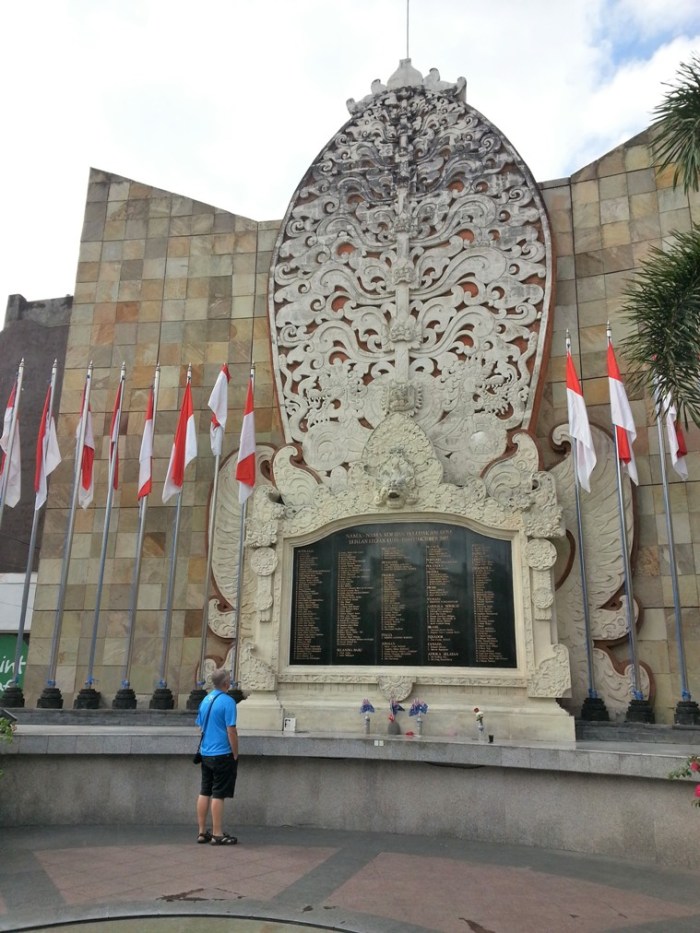
Bali Bombing Memorial

Fifteen years ago today – on October 12, 2002 – a bomb ripped through a crowd in Bali, Indonesia. Three bombs, in fact:  the first, inside a small, busy pub in the chock-a-block tourist district of Kuta; the second, across the street, outside a nightclub where revelers gathered to celebrate their participation in a rugby tournament; the third, near the Australian and U.S. consulates – underlining this clear message from Al-Qaeda that their war on Western “infidels” continued.  As wooden structures blazed and thatched roofs fell, hundreds fled through the flaming corridors and alleyways.  When the smoke cleared, 202 people were dead.

I lived in the country’s capital, Jakarta, at the time.  Was one of the Western “infidels” who made the emergency phone-tree calls, alerting other parents to the closure of our international school.  Listened to them react: first to the attack on beautiful Bali, more often than not their planned destination for the upcoming school break; then to the crater that now existed in the street where they and their families, too, might have walked.

Bali Bombing Memorial - Jamie WellingtonI watched staff and students mourn the death of Jamie Wellington – a popular math and phys.ed. teacher, avid rugby player/coach, husband to a school counsellor, and father to two toddlers.  I attended the funeral of fellow Canadian, Mervyn Popadynec, and listened to young widows of other rugby players speak about what they had lost that day.

Meanwhile, hundreds of other funerals took place in Australia, Indonesia, and 20 other nations – and 209 people returned home from Bali with injuries sustained in the bombing, including burns and amputations.

Bombings targeting foreigners continued in Jakarta and Bali – in 2003, 2004, 2005, and 2009.  Hotels and malls responded with blast walls and bomb-detectors; international schools became armed fortresses; tourists and expats (like us) left the country in droves.  Terrorists were caught, brought to trial, executed.

Two years after the initial Bali bombing, a memorial to those who died there was opened by the Indonesian government on the site of the former pub.  Photos showed it to be a small, tasteful plaza, featuring a lotus-shaped fountain and a tall stone carving of a Balinese kayonan depicting the tree of life.

Now, quieter times have returned to Bali and so, too, have the tourists. I was one of them last month, and together with my husband, made my way for the first time to the Bali Bombing Memorial.

Bali Bombing Memorial - CanadiansAll 202 names are etched in black marble there beneath the tree of life, divided by country of citizenship.  We searched for the names that we knew; shed a few tears for their loss – and for the loss, too, of our own naivety.  The 88 fatalities listed below Australia reminded us again of the enormity of that country’s bereavement.  The 38 Indonesian names detailed the cost to those who dared to work or fraternize with “infidels”.

We were not alone in the plaza.  Tourists paused to peruse the names, to take pictures; others with their own personal memories of that day leaned into one another, brushing fingers across the gold letters that represented a life.  While we lingered on the street scanning the new shops and the bumper-to-bumper traffic, visitors continued to come, in clumps of two, four, eight.  I was amazed at the numbers, given the 15 years that have passed.

And I wondered how many lives still bear scars of this day:  family, friends, co-workers, acquaintances of the 202 dead, of the 209 injured.  And the friends who, in turn, supported these survivors in their pain and loss.

From this one attack on this one day.

In a world where bomb blasts occur almost every day, in countries all over the globe.

I stopped doing the math.


IN MEMORY OF THOSE WHO DIED IN THE BALI BOMBING OF 2002 –

AND FOR INDIVIDUALS EVERYWHERE WHOSE LIVES HAVE BEEN LOST THROUGH TERRORISM AND WAR.

STRENGTH TO THOSE WHO LOVED THEM.


Text and photos © 2017 Catherine Van Brunschot