Fresh Bites

Snapshots of Croatia

Dubrovnik at nightStunning Dubrovnik – with its old city walls jutting into the Adriatic Sea and its evocative Game of Thrones settings – is Croatia’s brightest calling card for good reason. Our early morning walk atop its ramparts brings heart-stirring angles across the red-tiled roofs. A gondola ride up Mt. Srd provides even more great photos – plus an opportunity to peruse the passionate exhibit “Dubrovnik During the Homeland War” housed in the Napoleonic fortress.

But it’s the evenings, when the cruise-ship day-trippers have disappeared and the sun shines rosy on the tiled streets, that the Old Town is most magical…


Come along for the ride as I collect “Snapshots of Croatia” from tip to tip of the country’s Adriatic coast – then check out Calgary’s best sources for Croatian food and libations.  You’ll find it all in the current issue of Calgary’s City Palate.

Passion for Perigord

Chefs Fudge and Meret depart Château Montastru
Photo credit – Steve Dunk

It’s 9:30 am and I’m elbow-deep in foie gras in a château in southwest France.  Not literally to the elbows, mind you, but I’m as up-close-and-personal as I’m likely to get, thrilled and terrified in equal measure as I tease vascular tissue free from the prized duck liver.  Despite the cooling armour of the castle’s thick walls, the foie gras seems to be melting under my fingers and I’m beginning to sweat.  My mentor, Chef Thierry Meret, reassures me with his usual bonhomie – and a shot of plum brandy.

Read the full story in the Winter 2018 Issue of Taste & Travel International magazine.

Leftovers Black Box Challenge – Week 4: The Excuse

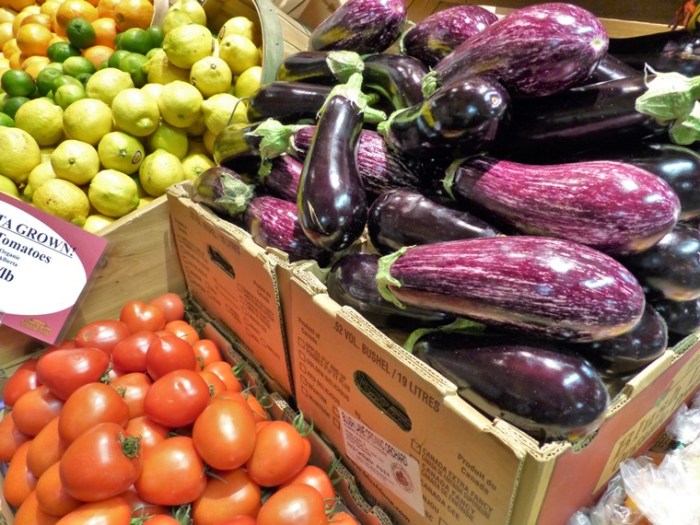
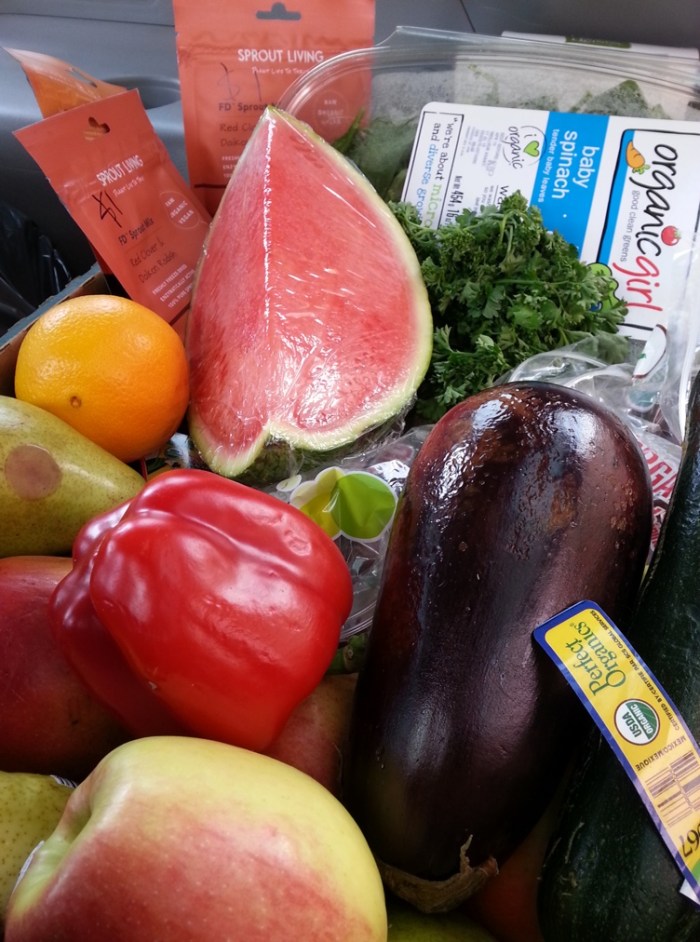
Calgary Farmers' Market produce

I had great plans for this week.  Multiple leftovers challenges to address in my fridge.

But in the same way that life can derail even the best-laid plans to use up all the food we bring home, life has conspired to take me away from my kitchen.

It’s family commitments that are calling – both delightful and less so.  But the upshot is that I have to take an early hiatus from this blog series.   I’m not quite sure when I’ll return.

Hit the FOLLOW button on the sidebar if you want to get a notice when I’m back.

DO keep sending me your leftovers conundrums, questions, and tips.  I love to hear about your challenges and triumphs with your own Black Box.

Cheers ’til later,

Catherine

Text and photos © 2018 Catherine Van Brunschot

Black box

Leftovers Black Box Challenge – Week 3: Burdensome Basil

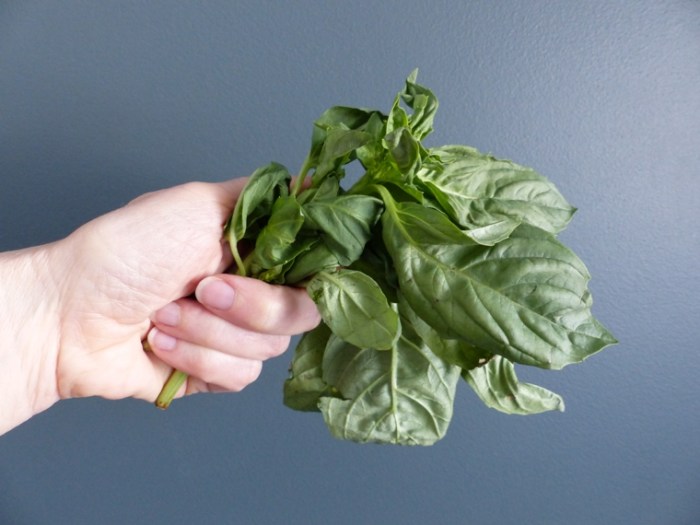
Handful of basil

I have a LOVE-HATE relationship with basil.

LOVE – because it’s my all-time favourite herb, whose sweet scent and peppery taste I can never grow tired of.

And LOVE – because whether its Genovese basil or Thai, lemon basil or purple,  it thrives in my patio pots all through the Calgary summer.

But HATE – because no matter what I do – water more, water less, choose a sunny spot, or not  – I cannot keep its glossy leaves alive through the winter.

And HATE – because when I  buy it in those plastic packets from the store, I use a little for a single meal and the remainder plummets toward an all-too-rapid demise in my fridge.

There’s some lurking in there now.

It arrived at my house a few days ago.  Served its duty in a lively Thai chicken stirfry.  And now sits there, taunting me.

Basil bouquetStorage is key, I know, for all herbs – but particularly for oh-so-tender basil.  When I spot it in the grocery store with roots intact, it always follows me home – where it stays happy in a tiny juice glass of oft-replenished water, a green bouquet on my kitchen counter, for more than a week.  (Or so I surmise – the irony of its constant visual presence means it disappears at a meteoric rate).

Not so much in a plastic coffer.

Other herbs, like mint, thyme and rosemary, lend themselves to simple drying.  Basil tends to go black unless it’s dried in the oven – and the resulting product loses everything I like about basil’s incomparable flavour.

I can’t pop it in the freezer (like I do with so many of my leftovers quandaries) unless it’s pureed with a bit of oil.  But then I’m likely to mix it up with the cubes of green adobo sauce that I keep there – and THAT can lead to some unpleasant surprises.  (I’m not a great labeller of freezer items).

A few years ago, Chef Patrick Dunn of InterCourse Chef Services introduced me to a slick trick.  He’d had great success storing his basil and other herbs in a sealed container with a whole raw egg.  The semi-permeable shell apparently allows excess moisture to be absorbed into the egg, and herbs stay crisp and fresh for two weeks.

Green Eggs and Ham by Dr SeussIncidentally,  the egg absorbs some of the herb colour and fragrance, as well – but this offers possibilities for delighting the Dr. Seuss fans in your house (and aren’t we all Dr. Seuss fans at heart?).

I’ve never tried Dunn’s technique.

I could whip up a little pesto in the blender – but my fridge already harbours half a jar of commercial pesto that was bought in a time crisis.

I could toss the basil into salads, tuck it into sandwiches – always a bitey enhancement – but its leaves are already drooping in a texturally-unpleasant way.

Friends tell me to stir it into whatever pasta dish I’m preparing.  I cook pasta maybe four times a year.

Meanwhile, the basil quick-marches toward imminent death, a prospect that just might drive me to drink.

But perhaps therein lies the answer.   My current favourite cocktail features a basil simple syrup.   Shaken with Canadian whisky, lemon juice, and egg white, and topped with a splash of red wine, it becomes a mouth-puckering and eye-pleasing November Sky.  It’s essentially an amped-up whisky sour created by Aileen Shipley at Cirque Restaurant in Fernie’s Lizard Creek Lodge – and I’m forever grateful for her ingenuity.

The simple syrup is probably its most luscious when the basil is fresher – but when everything’s all in, I doubt my tongue will be able to tell.

Think I’ll go conjure up some now.


NOVEMBER SKY

Serves 1

November Sky cocktail (Cirque Restaurant, Fernie, BC)

2 oz Crown Royal

1 oz lemon juice

1/2 oz basil simple syrup (recipe below)

1 egg white

1/2 oz dry red wine

Garnish: 2 skewered brandied cherries (or red grapes)


In a cocktail shaker combine Crown Royal, lemon juice, basil syrup and egg white.

Dry shake.  Add ice and shake again.

Strain into a rocks glass filled with ice.

Float red wine on top, and garnish with brandied cherries.


Basil Syrup

2 cups water

2 cups sugar

Generous handful of basil, rinsed


Combine water and sugar in a saucepan and heat until sugar is dissolved.

Add basil and simmer for 10 minutes.

Remove from heat and let steep until desired basil flavour is reached.

Strain out basil and store syrup in the fridge for up to a month.

Shared with permission from Cirque Restaurant at Lizard Creek Lodge (slopeside at Fernie Alpine Resort).


Text and photos © 2018 Catherine Van Brunschot

Black box


Leftovers Black Box Challenge – Week 2: Slaying your Dragons

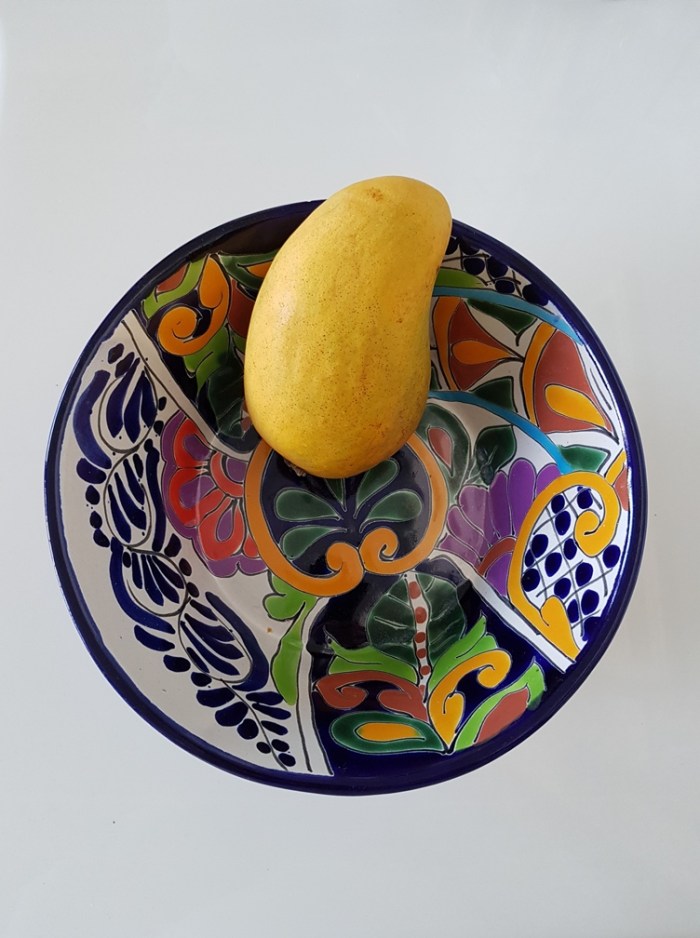
Ataulfo mango

They’re B-A-A-A-C-K!

Ataulfo mangoes.  They popped up this week in the supermarket, drawing my hand like bears to honey.  Their flesh was supple, their scent sweet.  Need I tell you that some of them ended up in my kitchen?

Those of you who have been following me for awhile will know of my irrational weakness for ataulfo mangos.  The fragrant golden fruits with their parrot-beak tops have become symbolic to me of all those impulsive purchases I’ve made at the grocery store or the farmers’ market with no plan as to how I’m going to use them.  They’re one of those things at high risk to shrivel away before I figure something out.  (Bet you know what yours are!)

But no worries.  This week the mangoes disappeared quickly.  One made it into a refreshing Mango Cucumber salad taught to me by Josefina Gonzalez Luigi of Cocina con Alma cooking school in Cozumel.  The others morphed into a creamy mango pudding from a Dairy Farmers of Canada ad lifted from a long-forgotten magazine.

They reminded me, though, of the importance of knowing my weaknesses and preparing a line of defence for them.  ( See #4 of my Food Lover’s Real Life Guide to Reducing Food Waste City Palate, Nov/Dec 2017).  I’ve learned to keep a stash of recipes for the things I know I’ll buy on impulse – and also for the things I throw out most often.

Food magazinesBut how to build this arsenal?

I’m a big reader of food magazines (no surprise there), so I routinely rip out recipes.  Those that address my particular nemeses get filed away where I can find them when crisis calls.

Of course, an online search will also offer up a legion of solutions to the ingredient conundrum – with the bonus that they might take me to new culinary frontiers.  Unfortunately, exploring those frontiers for new treasure can be a rabbit hole from which there’s no definite return, neither of time nor reward.  Poorly-construed recipes abound on the web, so unless I’ve got the experimentation time to discover a new favourite food blogger who speaks to my heart, I stick to reputable sources that multi-test their recipes.  Any “keepers” get filed on my laptop where I can find them, or printed off to join the rest of my stash.

Cookbook shelfThese days a trip to the virtual or brick-and-mortar bookstore will reveal a cornucopia of titles focused on a single ingredient or a single food category (the public library catalogue is a great resource, too).  My favourites include Sharon Hanna’s and Carol Pope’s The Book of Kale & Friends – great for dispatching an abundance of kale (obviously) as well as garden herbs – and Julie Van Rosendaal’s Out of the Orchard – indispensable for tackling those flats of Okanagan fruit that sing so loudly from farmers’ market stalls.

Market-based cookbooks can also be a great reference for addressing food waste vulnerabilities.  Two valuable new titles that made it to my shelf in 2017 include Chef Lynn Crawford’s Farm to Chef:  Cooking through the Seasons and David Tanis’ hefty tome,  Market Cooking.

But, no, the mangos were not a problem this week.  Leftover spinach was my Achilles’ heel instead.  And based on the responses I’ve received from many of you, tired greens are your frequent problem-child as well.

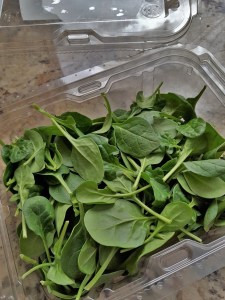
Spinach containerFortunately, my leafy-greens armoury is a stout one.  And I’ve learned to view every dish as a possible repository for foliage.  Greens thrown on sandwiches.  Tucked into tacos.  Stirred into soup.  Or curry.  Or eggs.  Or stirfries.

Let’s not forget that, sautéed with a few spices or a handful of favourite garnishes, they can make a tasty side dish on their own.  My first sampling of the Sautéed Kale Salad at the former Ox & Angela’s restaurant in Calgary (now Ox Bar de Tapas) made me a firm believer in that.  Consider combinations like these with whatever greens you have on hand (and a little garlic to amp up the flavour):

  • half a jar of roasted peppers or sundried tomatoes; garnished with goat cheese;
  • shallots or red onions fried with bacon or pancetta;
  • yellow onions sizzled with cayenne; topped with sesame seeds and a drizzle of sesame oil.

My favourite go-to is perhaps the easiest:  swiss chard fried up with garlic, salt, and hot pepper flakes and served with a squeeze of lemon.

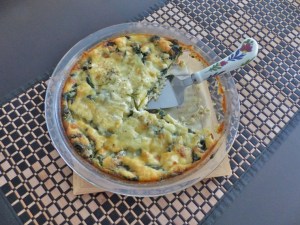
The biggest trick is to leave the container of greens front-row-centre in my fridge where I won’t forget it.  I almost lost track of mine this week after a couple of lacklustre side salads.  But I scavenged it in time, and the remainder anchored a nutrient-dense frittata served up for my supper with some good bread.

Here’s the frittata recipe that saved the day (with a basic egg-and-cheese base into which you can dump pretty much anything).  Feel free to add it to your personal leafy-green recipe arsenal.

And if you’ve got some great strategies of your own, please do share (at the bottom of this post).  Or write to me with your biggest leftovers millstones and I’ll address them in future posts if I can.

In the meantime, keep a steady eye on your Black Box – and watch for me next week.


SPINACH FRITTATA

Serves 4

Spinach frittata

1 Tbsp (15 ml) butter or vegetable oil

1/2 cup (125 ml) onion

2 garlic cloves, minced

6-8 handfuls of baby spinach (if you have less, that’s fine)

Pinch of nutmeg


Egg Mixture

8 eggs

1/4 cup (50 ml) milk

1/2 tsp (2 ml) salt (use less if your cheese is salty)

Black pepper to taste

1-2 cups (250-500 ml) of your choice of cheese(s)


Preheat oven to 350F (180C).  Grease a 9-inch (23 cm) glass pie plate and place on a baking sheet (to catch any drips).

Heat oil or butter in a large skillet over medium-high heat.  Add onion; cook until soft.

Stir in cloves, spinach, and nutmeg and cook until spinach is wilted.  Remove from heat.

In a large bowl, combine egg mixture ingredients.  Stir spinach mixture into bowl.

Pour into prepared pie plate; stir to distribute ingredients evenly.

Bake in centre of oven until top is golden and centre is set.


Text and photos © 2018 Catherine Van Brunschot

Black box


Leftovers Black Box Challenge – Week 1: Inspiration

(*Black Box Challenge (def’n) – a competitive event frequently seen on TV food networks, whereby chefs attempt to create the best dish from a collection of ingredients not revealed to them – i.e., hidden in a black box – until the event begins)

Black boxIt’s all Julie Van Rosendaal’s fault.

This quest that I’ve set myself – to minimize my own food waste by looking at my fridge contents as a sort of Black Box Challenge – yeah, you can blame it on her.

Long before I began volunteering for LeftOvers Calgary and long before I discovered the deplorable figures about food waste,  Calgary food writer Julie Van Rosendaal had me started on a quiet culinary journey.  (Unbeknownst to her).

I’m a big fan of her weekly CBC Radio column.  How can you not love her infectious enthusiasm for how easy it is to put good food on the table?  Her on-air coaching helps me tweak my own kitchen technique.  She has a phenomenally-intuitive approach to cooking that I wish I could emulate (big on throwing in “a little of this, or a little of that, whatever you’ve got around”) .  But I remain a firm kitchen chemist, sadly shackled to recipes and careful measurement.

Until one day, she said something that clicked a cylinder into place:  “When you’re planning your meals, start with what’s in your fridge”.

Too often, she explained, we decide first what we want to make for dinner, then go out and buy the ingredients for it.  This means that what’s already in our fridge runs a high risk of staying there, while the new groceries create a fresh crop of odds and bits that will be our next leftovers problem.  Why not reverse that process, she suggested:  start with what you already have and use it as a foundation for your next meal.

A seed had been planted.

My transition sprouted slowly.  One day, a yam at the bottom of my potato bin set me scanning the indexes of my favourite cookbooks for yam-anchored side dishes.  On another, some tired lemons had me trawling the web for citrus-infused mains.  Small successes brought me a disproportionate amount of satisfaction -not just for throwing less out and doing my bit to save the planet, but for the pure pleasure of creativity.  And one evening I knew I was hooked for good.

Tired celeryBusy with deadlines and with no time or inclination to go the store, I opened my fridge to the dispiriting vision of limp celery sticks – leftover crudités from a weekend dinner party.  A freezer dive produced two tiny chorizo sausages and half a bag of raw shrimp – vestiges of previous taco nights.  Celery, shrimp and sausage got me to thinking about jambalaya – and soon I was digging into my favourite cookbook by Chef Michael Smith .

His recipe called for both green and red bell peppers; my crisper held the better part of a single red.  Good enough.  A sample rice packet picked up from last fall’s runners’ fair could fill the medium-grain rice requirement and some dried thyme could substitute for filé powder.  I was temporarily stymied by the uncharacteristic absence of  canned tomatoes in my pantry.  But I made do with a few tomatoes shriveling on my kitchen counter – and threw in my last couple handfuls of spinach for good measure.

And the result?  My man raved about the jambalaya I produced that night.  I couldn’t disagree.  I had created a delicious dinner from nothing but leftover bits – and the thrill of the challenge made me a firm convert to the delights of “Black Box” inspiration.  (Thank you, Julie!  You might not have coined the term, but the inspiration is all yours).

Note that I haven’t given up my recipe crutch.  And I still plan most meals on desire and a long grocery list.  But at least once a week I start my menu-planning with a peek in my fridge – and the amount of food I throw into my green bin has dwindled to a trickle.  In my personal battle against food waste, fun has proven SO much more motivating than guilt.

I’ve included my jambalaya rendition for you here (Or as close as I can remember it.  Feel free to improvise).

And as promised in my November post, I’ll spend the next few weeks sharing the leftovers challenges that crop up in my fridge and the strategies I’ve devised to deal with them.  I hope through this series that you, too, will be inspired to tackle your own Black Box – and that, like me, you’ll discover it to be a new culinary muse.

In the meantime, check out Erin Lawrence’s article in this month’s issue of City Palate for more on the food waste conundrum (you’ll find it on page 22).

And watch for my post next week with another recipe or two!


Improvised Jambalaya

Serves 2


1 Tbsp vegetable oil

4 ounces chorizo (or other spicy sausage), sliced into thin rounds

2 stalks (or so) of celery, chopped

1 onion, chopped

1 red bell pepper, chopped

2 cloves of garlic, minced

1-1/2 tsp paprika

1-1/2 tsp ground cumin

1-1/2 tsp dried thyme

1/4 tsp cayenne pepper

1 cup of medium-grain rice

1/3 pound shrimp, peeled and deveined

2 or 3 tomatoes

3/4 cup water (or chicken broth, if you have it)

Heat a large heavy pot over medium-high heat.  Add vegetable oil and sausage, and sauté until lightly browned (2-3 minutes).

Add celery, onion, pepper, garlic, paprika, cumin, thyme, and cayenne.  Continue cooking until vegetables have softened (4-5 minutes).

Stir in the rice, coating the grains with oil and lightly toasting for a minute or two.  Stir in shrimp, tomatoes, and water or broth, and bring to a full boil.

Reduce heat to simmer. Cover pot with a tight lid and cook for approximately 20 minutes. Turn off heat and rest 10 minutes without removing lid.  Serve with pride.

(*If tomatoes are not very juicy and mixture becomes dry before the rice is fully-cooked, add more water or broth, replace lid, and continue to simmer until done).

Text and photos © 2018 Catherine Van Brunschot


Thoughts on Hospitality

Village on Serua island
Village at Serua Island, Indonesia

At this time of year, when so many of us are preparing to open our homes to friends and family, my mind keeps going back to an experience that I had in an unlikely place this past September.

With eleven other passengers and a crew of fifteen, I was motoring through some of the remotest islands of Indonesia on a traditional two-masted phinisi schooner.  We’d been making slow headway through our two-week sailing trip, hampered by a cranky engine and stormy seas that had us reconfiguring our route on a daily basis to avoid the worst of the swells.

The Katharina at seaAs darkness settled over the deck on Day 7, the captain decided to make for Serua by morning. This tiny volcanic island had once hosted a community of five hundred people on its saddle ridge – until  a 1968 eruption caused villagers to be evacuated to Seram, some 400 kilometres to the north.  Over the decades, about a hundred of the villagers had trickled back to the island to rebuild a scanty village near the shore – their numbers limited by the lack of a school or medical clinic, but the green fertility of their island making a homing call too loud to ignore.  The ruins of the church were still visible on the ridge – offering a destination with which to stretch sea-weary legs for those of us able to tackle the steep trail.

Before daybreak, our ship radio crackled to life.  “Phinisi! Phinisi! Are you coming our way?”  Ships were a rare sight in these parts, and in the pre-dawn light we’d been spotted on the horizon by Seruan fisherman.  Before we’d even announced our presence, the village kepala (headman) was extending an invitation to come ashore.

A Serua welcomeNo sooner had we dropped anchor than several village men approached in wooden canoes, bearing the gift of a grouper for our dinner, and offering to motor us safely to the slip of a gravel beach.  Here a dozen other villagers waited in welcome and curiosity.

At the kepala‘s house,  plastic chairs were pulled out for us under a tarp stretched across bamboo poles.  A tiny cloth-draped table offered drinking water and banana chips.  When we expressed concern about making the ridge before the heat got unbearable, the family waved us on, with promises to return when we’d finished our climb.

Trail to the ridge -web
Photo credit – Christian Romsy

We followed the villager assigned to lead us up the trail, past gardens of cassava and sweet potato and papaya, and through the biggest banana forest I had ever seen.  As we rested near the ruined church, shouts from the forest let us know that some of the men had taken a break from the clove and nutmeg harvest to pick young coconuts for our refreshment. The sweet coconut water restored us in the soaring heat like no sport drink ever could.

We got our formal welcome to the island when we returned to the kepala‘s house, and the kepala‘s wife plied us with fresh, hot pisang goreng (fried bananas).  Our enthusiasm for the cooking meant the pisang goreng kept coming – and with it, photos and stories and smiles and laughter.  With our sketchy Indonesian, much flapping of hands, and some translation by our crew, we talked together of food and family – universal things. At some point, the conversation devolved into gentle bawdy humour (another universal tendency, it seems).

Photo credit – Christian Romsy

When the time came to leave, the kepala‘s wife produced a big jar of banana chips for us to share on our onward voyage. We dug into our packs for reciprocal gifts – Canada flag pins and gently-used clothing.  In a shower of hand waves and terima kasihs (thank- you’s), we climbed back into the canoes and headed for the ship.

Although I’ve been treated many times to Indonesian hospitality, this was as genuine and generous a welcome as I’ve experienced anywhere – and I tried to describe it to those who’d been warned off the trail and had stayed on board.  But it was a fellow traveller named Geoffrey who said it best:  “This is the place you go when you need to restore your faith in humanity”.

Serua Island welcoming committee
Photo credit – Margaret Cole

It’s those thoughts and images that are forefront in my mind this week. The gift of opening one’s home unreservedly to others.  The recognition that the opportunity to connect is valuable and fleeting and we should drop everything to embrace it whenever it turns up.

This is where I’m supposed to vow to follow the lead of those Seruan villagers – to shelve time, ego, and image for the higher principles of spontaneity, connecting, and community building.  But I’d be disingenuous if I did.  Perfectionist that I am – prone to introversion – with a streak of competitivenes… yeah, it’s not going to happen.  Irritability seems my go-to reaction to the unexpected. The best that I can do is to prepare thoroughly and lovingly for the arrival of my extended family this weekend – and make detailed plans for hosting friends in the new year.

But I did want to take time to offer kudos to those whose doors are always open wide.  You have my utmost respect and admiration – and I am truly blessed to call some of you my friends.

PoinsettasMy thanks to the villagers of Serua island.  And my thanks to those of you who are of a similar ilk. Yours is the generosity of spirit that would prove the undoing of so much that has gone wrong on our planet – if only more of us had the selflessness to do the same.

Merry Christmas and Happy Holidays to you all – and may 2018 bring as much to you as you give.


Text and photos © 2017 Catherine Van Brunschot (except where noted)


Diving into the Black Box – a Leftovers Challenge

Blush Lane- LeftOvers pickup
Photo credit: C. Van Brunschot

If you’ve been following my FRESH BITES blog or my FaceBook page, you’ll know I’m as hooked on issues of food waste and hunger as I am on sharing stories of great food in amazing places.  (Check out the new issue of City Palate magazine for my article “Feeding the Community” – highlighting an innovative organization tackling food waste and hunger right here in Calgary).

But when I learned from a 2014 City of Calgary study that 36% of the household trash hitting our local landfills was FOOD – and that more than half of that discarded food was edible – it was pretty impossible not to look at my own kitchen.

I like to think I do better than average at minimizing what I throw out (don’t we all?).  And my weekly volunteer work for LeftOvers Calgary certainly keeps a fire lit under my feet.  But DANG I get myself into trouble sometimes (see the reference to ataulfo mangos in the City Palate piece.  Add to that my weakness for fresh herbs, leafy greens, growing tomatoes, trying out unusual ingredients – throw in the siren call of Calgary’s great restaurants taking me away from my kitchen… Let’s just say my crisper drawer can get overwhelmed pretty quickly).

So I’ve decided it’s time to up my game.  I’m launching a six-week quest to reduce food waste in my own kitchen (six weeks’ practice creates a new habit, they say).

Each week, I’ll identify one thing that’s languishing in my fridge.  My task will be to find creative ways to use it up.  Sort of my own Black Box challenge.

In the interest of accountability, I’ll post my efforts to my blog.  I’ll include a recipe or two – and any tips I’ve uncovered on my own or from others.

Don’t think for a minute that this is just about principle and virtue and doing the right thing.  Truth is, I’ve tried previously to start my meal-planning with what’s already in my fridge and made a remarkable discovery:

It’s FUN! Gets my creative juices flowing.  Expands my cooking repertoire. (And – okay – makes me feel a little virtuous, too).

So look for my first Black Box post in January (Launching the series now, as we head into the holiday season = recipe for failure).  In the meantime, send me your own leftovers conundrums.  Or your proven personal tips.  Or tell me about people in the community who you know are tackling this well.

I’ll take a look at what’s lurking in my fridge and let you know what I find.

Text and photos © 2017 Catherine Van Brunschot


Bali 2002 Remembered

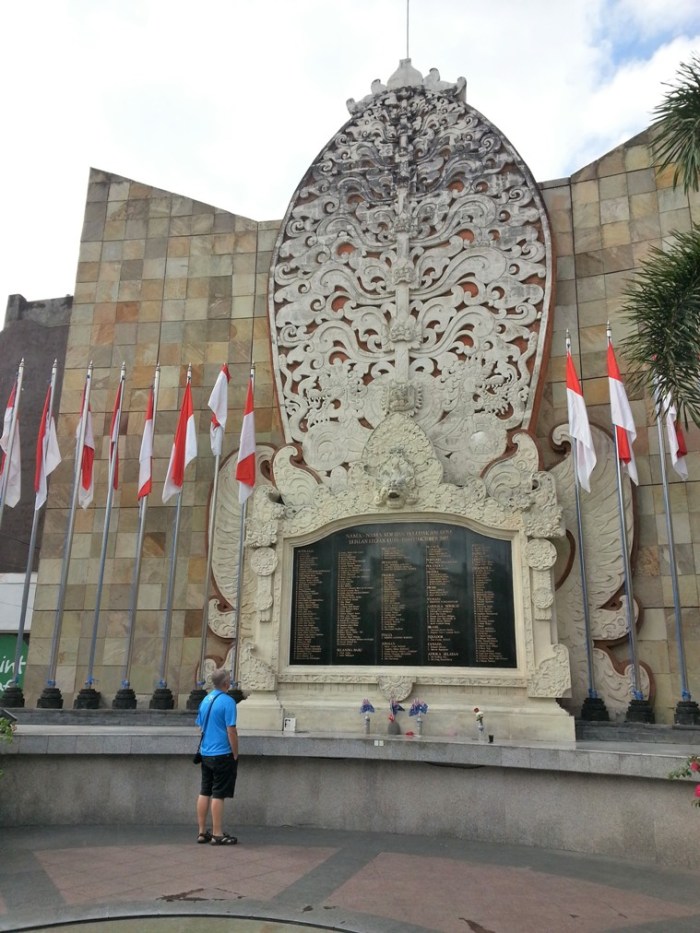
Bali Bombing Memorial

Fifteen years ago today – on October 12, 2002 – a bomb ripped through a crowd in Bali, Indonesia. Three bombs, in fact:  the first, inside a small, busy pub in the chock-a-block tourist district of Kuta; the second, across the street, outside a nightclub where revelers gathered to celebrate their participation in a rugby tournament; the third, near the Australian and U.S. consulates – underlining this clear message from Al-Qaeda that their war on Western “infidels” continued.  As wooden structures blazed and thatched roofs fell, hundreds fled through the flaming corridors and alleyways.  When the smoke cleared, 202 people were dead.

I lived in the country’s capital, Jakarta, at the time.  Was one of the Western “infidels” who made the emergency phone-tree calls, alerting other parents to the closure of our international school.  Listened to them react: first to the attack on beautiful Bali, more often than not their planned destination for the upcoming school break; then to the crater that now existed in the street where they and their families, too, might have walked.

Bali Bombing Memorial - Jamie WellingtonI watched staff and students mourn the death of Jamie Wellington – a popular math and phys.ed. teacher, avid rugby player/coach, husband to a school counsellor, and father to two toddlers.  I attended the funeral of fellow Canadian, Mervyn Popadynec, and listened to young widows of other rugby players speak about what they had lost that day.

Meanwhile, hundreds of other funerals took place in Australia, Indonesia, and 20 other nations – and 209 people returned home from Bali with injuries sustained in the bombing, including burns and amputations.

Bombings targeting foreigners continued in Jakarta and Bali – in 2003, 2004, 2005, and 2009.  Hotels and malls responded with blast walls and bomb-detectors; international schools became armed fortresses; tourists and expats (like us) left the country in droves.  Terrorists were caught, brought to trial, executed.

Two years after the initial Bali bombing, a memorial to those who died there was opened by the Indonesian government on the site of the former pub.  Photos showed it to be a small, tasteful plaza, featuring a lotus-shaped fountain and a tall stone carving of a Balinese kayonan depicting the tree of life.

Now, quieter times have returned to Bali and so, too, have the tourists. I was one of them last month, and together with my husband, made my way for the first time to the Bali Bombing Memorial.

Bali Bombing Memorial - CanadiansAll 202 names are etched in black marble there beneath the tree of life, divided by country of citizenship.  We searched for the names that we knew; shed a few tears for their loss – and for the loss, too, of our own naivety.  The 88 fatalities listed below Australia reminded us again of the enormity of that country’s bereavement.  The 38 Indonesian names detailed the cost to those who dared to work or fraternize with “infidels”.

We were not alone in the plaza.  Tourists paused to peruse the names, to take pictures; others with their own personal memories of that day leaned into one another, brushing fingers across the gold letters that represented a life.  While we lingered on the street scanning the new shops and the bumper-to-bumper traffic, visitors continued to come, in clumps of two, four, eight.  I was amazed at the numbers, given the 15 years that have passed.

And I wondered how many lives still bear scars of this day:  family, friends, co-workers, acquaintances of the 202 dead, of the 209 injured.  And the friends who, in turn, supported these survivors in their pain and loss.

From this one attack on this one day.

In a world where bomb blasts occur almost every day, in countries all over the globe.

I stopped doing the math.


IN MEMORY OF THOSE WHO DIED IN THE BALI BOMBING OF 2002 –

AND FOR INDIVIDUALS EVERYWHERE WHOSE LIVES HAVE BEEN LOST THROUGH TERRORISM AND WAR.

STRENGTH TO THOSE WHO LOVED THEM.


Text and photos © 2017 Catherine Van Brunschot

International Recognition for Calgary Pâtissier

Yann Haute Patisserie - Calgary

In a pretty yellow house in Calgary’s Mission district, magic happens.

And now the world has been let in on that little secret.

I’m talking about Yann Haute Patisserie, owned and operated by pastry Chef Yann Blanchard and his wife, Jeraldine, since Christmas Eve 2009. It’s an unlikely slice of Paris on the Canadian prairies – a picture-perfect boutique dedicated to the creation of pastry that is as beautiful as it tastes.

The tiny shop has a reputation for having the best macarons in a city spoiled for choice on that front.  I’m a personal fan of its viennoiserie.

And you should see the cakes.

This past week Chef Yann Blanchard became the first and only Canadian chef to be admitted to the Relais Dessert Association, an organization that recognizes the best in French pastry.  Akin to obtaining a Michelin star, Chef Yann joins an elite group of approximately 100 pastry chefs and chocolatiers from 19 different countries who have been acknowledged for the quality of their ingredients, execution, and artistry, as well as their passion and professionalism.

Yann w Relais Dessert pieceChef Yann excels on all those fronts.  But I’ll let you in on another secret.

Some of those gorgeous pastries are delivered free each week to those wrestling their demons at Alpha House – a non-profit agency that has offered a safe environment for 35 years to clients struggling with addiction.

You see, Yann Haute Patisserie is also a regular donor to LeftOvers Calgary – a grassroots organization that rescues food that would otherwise be thrown into the landfill, and gets that food to service agencies in need.  Each day, the staff at Yann Haute carefully squirrel away unsold pastries into their freezer.  Once a week, a LeftOvers volunteer picks up those pastries and delivers them to Alpha House’s detox and recovery centre.  As a volunteer driver with LeftOvers Calgary, I’ve been a lucky witness to the smiles that appear at the recovery centre when I arrive with that bag of magic.

Yann Blanchard and colleagues at Relais Dessert AssociationSo congratulations to Chef Yann Blanchard for his remarkable Relais Dessert distinction.  It’s time the world knew more about his pastry and passion.

And kudos for extending that passion to the environment  – and to those who might not ever pass through the patisserie doors.

Read more about Yann Haute Patisserie and Chef Yann’s Relais Dessert designation at yannboutique.com or on Facebook .


Text © 2017 Catherine Van Brunschot

Photos – Yann Haute Patisserie